Stack Toolkit is supported by readers like yourself. If you choose to purchase a product or service after clicking one of our links, we may earn a commission. That small support is what allows us to keep publishing high-quality, free content.
If you’re starting a side hustle in 2026, the ‘big three’—Etsy, Shopify, and Wix—have changed more in the last 12 months than in the previous five years combined. With the explosion of AI-driven search and social commerce (like TikTok Shop integrations), choosing the wrong home for your products isn’t just a headache; it’s a massive drain on your profit margins from day one.
When I first launched my business more than 12 years ago, I started with Etsy. Back then, it was just a place for unique Christmas presents. Today, it’s a global powerhouse, but the competition is fiercer than ever. Having navigated the shift from a ‘marketplace stall’ to a ‘standalone brand’ on Shopify, I’ve seen firsthand how your choice affects your ability to actually own your customers in this new AI-first era. Here is the 2026 reality check you need to cut out the decade-long headache I dealt with.
2026 Side Hustle Cheat Sheet: At a Glance
| Feature | Etsy (Marketplace) | Shopify (eCommerce) | Wix (Website Builder) |
| Best For | Testing a new hobby | Scaling a serious brand | Visual/Design-led stores |
| Startup Cost | $0 (Pay as you sell) | $42 AUD/mo (Yearly) | $29 AUD/mo (Core) |
| Built-in Traffic | High (Internal search) | None (Self-driven) | None (Self-driven) |
| Transaction Fees | ~10-12% (Total) | 1.75% + 30¢ (Lowest) | ~2.9% + 30¢ |
| Ownership | Limited (It’s Etsy’s site) | Full (You own the data) | Full (You own the site) |
My 12-Year Journey: From Marketplace to Brand
While in conversation with colleagues at work 12 years ago, Christmas was just around the corner and we were discussing where to find unique presents. A few of them raved on about Etsy – it was the first time I had heard about this platform but back then it was THE place to sell if you were just starting out.
When the time came around and I toyed with the idea of selling my handmade products, Etsy was still very much on the forefront of my mind. I went straight to the Etsy website – opened up a store and immediately started selling. I got my first sale within a week. It was that easy. I stuck around for a couple of years and decided I wanted to have my own website so I moved onto Big Cartel.
Having my own website was a big learning curve as I needed to bring in my own traffic, unlike Etsy. My business was growing and I desperately wanted (and needed) a change. Long story short, the website designer in Big Cartel was too restrictive and I couldn’t design it the way I wanted to even when I hired a friend to change the code for me.
Fast forward another few years, I casually met up with a small business owner friend of mine and I shared my dilemma. She instantly recommended Shopify – the ease of use, the ability to update your website layout and choose different themes, managing inventory was intuitive… I needed to check it out for myself. If you haven’t already guessed, I have been with Shopify ever since and am still using it to this day. (Oh and I still have my Etsy store, I’ll explain why below)
So let’s dive into the ultimate comparison of Etsy vs. Shopify vs. Wix to help you avoid the same 12-year journey I took. (Cut out the massive headache that I dealt with from switching platforms – not only was it stressful but time-consuming!) Here is my comparison.
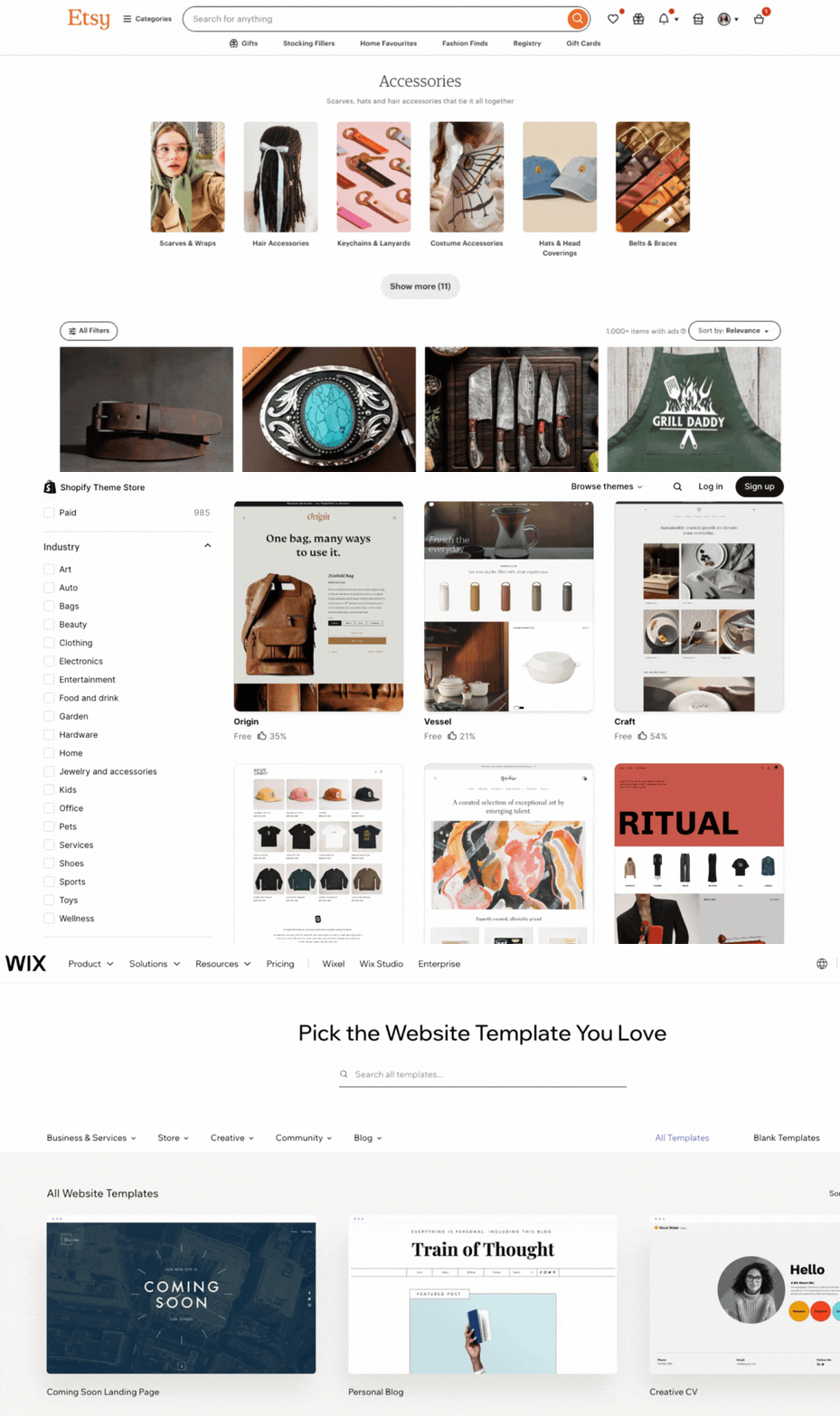
1. Store Type & Business Model
Etsy
Online Marketplace. You are a stall in a huge digital fair.
Shopify
Standalone Store. You own the entire shop. Dedicated eCommerce platform
Wix
Standalone Store. You own the entire shop. Website Builder with eCommerce
My Personal Insight on the Business Model: I learned very early on that Etsy doesn’t care about my brand, it cares about the Etsy brand. You are always one of millions of other listings. When I shifted to Shopify, the mindset changed entirely: every customer I brought in belonged to me, and every design decision reinforced my brand, not the platform’s.
2. Best products to sell?
Etsy
Handmade, vintage, unique, craft supplies, and digital downloads. For beginners.
Shopify
Scalable, branded businesses, high volume, dropshipping, physical products.
Wix
Small businesses, service providers, or those who need a professional website with an integrated small shop.
My Personal Insight on the best products to sell: When I started creating my own brand and worked on product photos for my Shopify store, the difference in conversion was immediate. Etsy is perfect for the unique item. Shopify is for the repeat customer and building a full collection. Wix is a strong choice if you’re a service provider (like a design studio) who occasionally sells physical products (like prints or tools).
3. Setup & Ease of Use
Etsy
Easiest/Fastest. List products immediately and start selling in under an hour.
Shopify
Easy. Simple setup, but theme selection and initial setup take 1-3 days. Shopify could be a little tricky when it comes to setting up menus and pages and linking them all.
Wix
Moderate. Drag-and-drop is easy, but the initial design can take longer than Shopify.
My Personal Insight on the Setup: The initial friction on Shopify was actually a good thing. It forced me to think about my brand logo, product descriptions, and core pages before launching. With Etsy, I rushed to list, and my early listings were messy. Wix’s drag-and-drop is powerful, but that freedom can lead to decision paralysis; you can spend weeks tweaking the design instead of making a sale. Etsy is launch-ready; Shopify is growth-ready.
4. Customers/Traffic Source
Etsy
Built-in. Visitors are already looking to buy your type of product. This is the reason why I decided to keep my Etsy store. Yes, the fees add up, but I see it as another avenue where I am getting traffic and eyes on my products.
Shopify
Self-Driven. You must use SEO, social media, and ads to bring customers in.
Wix
Self-Driven. Relies on your own marketing efforts.
My Personal Insight on Traffic Source: The greatest shock moving to a standalone store (Big Cartel, then Shopify) was the silence. My first month was almost zero sales. On Etsy, the traffic is free (but you pay for it in fees). On Shopify/Wix, the traffic costs you time or money (marketing), but you own the customer data, which is the real long-term value. This is why Etsy remains my “lead generation” tool, but Shopify is my “profit engine.”
5. Total Transaction Fees & True Cost
Prices are subject to change based on your geographic location. The prices below are the official Australian AUD rates.
Etsy
HIGH. 6.5% Transaction Fee (on total sale, including shipping/gift wrap) + Payment Processing Fee (e.g., 3% + $0.25 AUD for domestic Australian orders) + $0.20 USD ($0.30 AUD) Listing Fee. Total percentage is typically ~10% to 12% of the sale price.
Shopify
LOW. Basic Plan: $42 AUD/month – billed annually, or $56 AUD/month – billed monthly. (The comparable US price is $39 USD/month). Transaction Fee: 0% if using Shopify Payments, but Credit Card Rate applies (e.g., 1.75% + 30¢ AUD for online domestic cards).
Wix
LOW-MODERATE. Core Plan (Cheapest for selling): $42 AUD/month (billed annually). Often discounted to $21/month for the first year. $0 platform fee (only pay payment processor fee).
My Personal Insight on Fees: When I was first starting out, I thought Etsy was the only way to go. Its 10%+ fee looked small compared to Shopify’s $56 AUD/month subscription (Basic plan). But once my sales volume hit around $800 AUD a month, I realised I was paying Etsy $80+ AUD in fees, while Shopify’s total cost (subscription plus payment processing) was closer to $70 AUD. That $10 difference a month, which grows quickly with sales, was my first big lesson in profit margins.
That’s when I knew I had to move my primary sales channel to Shopify. However, I still maintain my Etsy store today, as it serves as an excellent, low-effort sales channel that brings in customers I wouldn’t reach otherwise.
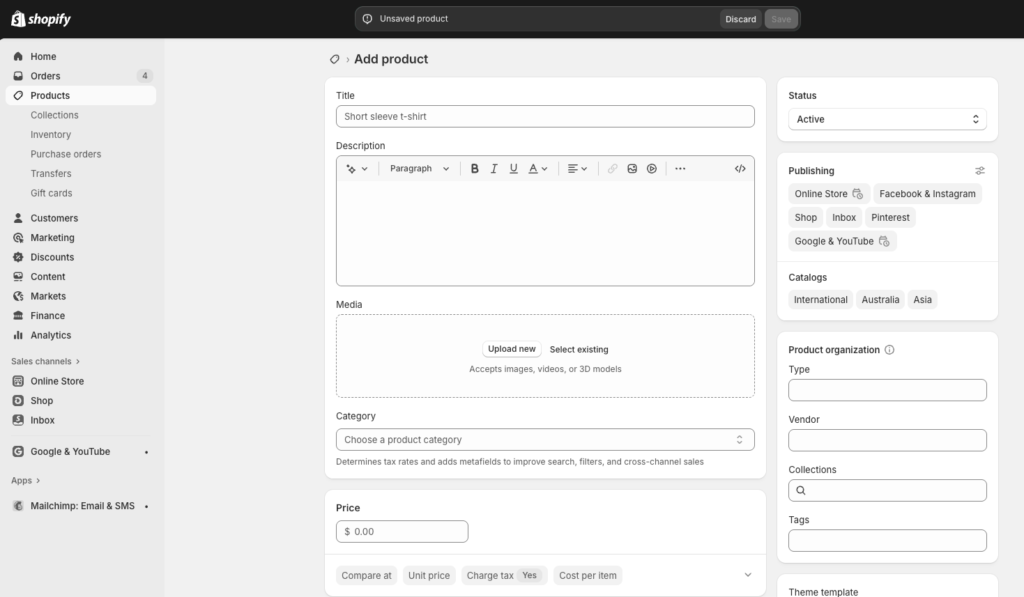
Shopify’s dashboard showing the product creation page
6. Inventory Management
Etsy
Basic. Good for small batch, handmade, or unique items.
Shopify
Best-in-Class. Built for complex inventory, variations, and high volume.
Wix
Good. Effective for medium inventory size; handles variations well.
My Personal Insight on Inventory Management: When my business scaled past 50 different product variations (sizes/colours), Etsy became a confusing, time-consuming mess. Shopify’s system, especially with integrated apps, meant I could manage inventory across my website and even my Etsy store from one dashboard. Wix is certainly a step up from Etsy, but if you dream of having a warehouse, Shopify is the only platform.
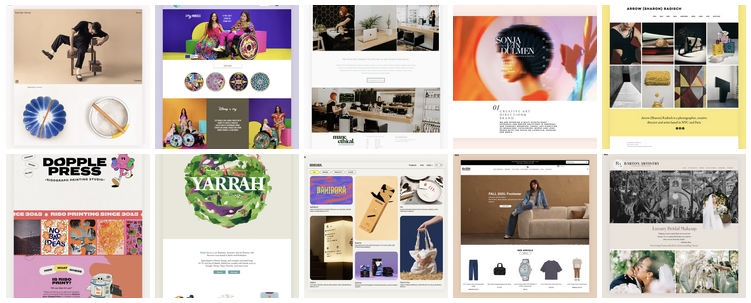
Wix website examples Source: Wix
7. Branding & Customisation
Etsy
Low. Most Etsy shops look the same. Minimal design control. The only sections you can personalise is your store banner, photos for your listings and the About me section.
Shopify
High. Full control over themes, code, and customer experience.
Wix
Very High. Excellent drag-and-drop design flexibility.
My Personal Insight on Branding: After a couple of years on Etsy, I felt invisible. Every shop had a similar feel, the same fonts, and the same checkout experience. When I finally moved to Big Cartel (and later, Shopify), I understood the power of a custom brand. Wix is arguably the most fun here though – I love seeing all the different websites that creatives have made! The drag-and-drop editor is fantastic for highly visual brands. But for commerce power and professional themes, Shopify is unmatched. If branding is your long-term goal, you must choose a standalone store.
8. Ideal For
Etsy
Hobbyist/Maker testing a new product with low volume sales.
Shopify
Growth-Focused Brand aiming for professional appearance and high volume sales.
Wix
Visually-Driven Brand that wants a beautiful, custom site with solid sales tools.
My Personal Insight: If you have zero budget and need proof of concept, start with Etsy. But if you have $50 AUD a month, you are ready for a standalone store. I recommend Shopify for anyone whose primary goal is selling efficiently (inventory, shipping, features). Choose Wix if your brand’s unique design and visual story are the most critical components of your sales strategy.
Conclusion
1. Etsy 2026: The “Marketplace” Choice
Pros:
- Instant Audience: Access to millions of buyers without spending a cent on ads.
- Low Risk: No monthly subscription fee; you only pay when you sell.
- Ease of Use: Launch a shop in under 60 minutes.
Cons:
- High Fees: Between listing, transaction, and payment fees, you lose 10-12% of every sale.
- No Branding: Customers usually say “I bought it on Etsy,” not “I bought it from your brand.”
- Zero Ownership: You don’t own your customer email list, which limits long-term growth.
2. Shopify 2026: The “Growth” Choice
Pros:
- Profit Margins: Significantly cheaper than Etsy once you hit $800+ in monthly sales.
- Scalability: Handles 1 to 1,000,000 products with professional inventory tools.
- AI Features: Native 2026 tools for automated product descriptions and customer support.
Cons:
- Monthly Cost: $42 AUD/mo is an upfront expense regardless of sales volume.
- Marketing Required: You start with zero traffic; you must build your own through SEO or social media.
- Learning Curve: Setting up your first theme and domain takes 1-3 days of focused work.
3. Wix 2026: The “Design” Choice
Pros:
- Creative Freedom: The best drag-and-drop editor for highly visual, artistic brands.
- All-in-One: Includes booking, blogging, and selling tools in one dashboard.
- Free Domain: Often includes a free domain name for the first year.
Cons:
- Speed: Heavy designs can load slower than Shopify, which can hurt mobile conversion.
- Limited E-commerce: Great for small shops, but gets clunky if you have hundreds of product variations.
- Locked-In: It is very difficult to move a Wix site to another platform later compared to Shopify.
The 2026 Stack Toolkit Verdict
After my 12-year journey through the eCommerce landscape, here is the definitive advice I can give you for the 2026 season: the “best” platform isn’t about which has the lowest fees or the most features. It’s about where your business is right now.
- If you are a Beginner or a Maker: Go with Etsy. It’s the simplest way to start making sales today. Focus on validating your product using their built-in audience. View their fees as the price of admission to a massive digital fair.
- If you are Ready to Grow (or scale immediately): Go with Shopify. This is the dedicated e-commerce platform built for growth. If you have $50 a month, you are ready for the control and higher profit margins Shopify offers.
For 9 out of 10 growth-focused sellers, Shopify is the superior choice. It is the most robust e-commerce tool on the market, giving you professional control over every step of the customer journey, from inventory to check-out. If you are aiming for high-volume, don’t waste time on a marketplace – build your brand on the best platform from day one.
If you are a Visually-Focused Brand (or already have a following): Go with Wix. If design flexibility is your absolute priority and you need a beautiful website that happens to have a shop, Wix gives you the creative freedom of a designer with solid tools to back up your sales.
Choose the platform that matches your 2026 goal, not just your budget today. Use this comparison to avoid the long detours I took and start building your brand on the right foundation.